In a world where time and efficiency are critical, marketing automation has become a powerful tool for modern marketers. Whether you’re part of an agency, a freelancer managing multiple clients, or an in-house specialist, automation can help simplify your workflow, personalize communication at scale, and improve campaign performance.
But successful automation isn’t just about using the right tools—it’s about building a strategy that aligns with your goals and enhances your entire marketing process. From email sequences to campaign tracking, the right approach can make a real difference.
In this article, we’ll explore what marketing automation really means, how it can benefit your business, and how to implement it effectively—from setup to optimization.
Table of contents:
- What is marketing automation and why it matters in 2025
- Advantages of marketing automation for agencies and freelancers
- Examples of marketing automation done right
- Building a strong marketing automation strategy
- How to implement marketing automation step by step
- Best practices for sustained automation success
- How theMarketer helps you master marketing automation

What is marketing automation and why it matters in 2025
In simple terms, marketing automation refers to the use of software and technology to manage repetitive marketing tasks, such as sending emails, nurturing leads, segmenting audiences, and tracking campaign performance—all with minimal manual input. It’s about working smarter, not harder.
For agencies and freelancers juggling multiple campaigns or clients, automation means more than just saving time—it means creating scalable, data-driven strategies that consistently deliver results. As marketing channels evolve and user expectations increase, automation allows you to respond faster, stay relevant, and focus on the bigger picture.
Defining marketing automation in simple terms
At its core, marketing automation helps teams streamline how they attract, convert, and retain customers. Instead of manually sending emails or creating individual workflows, tools automate these steps based on behavior, timing, and pre-set triggers. This improves consistency and allows for more personalized experiences.
Automation in digital marketing: evolution and context
The automation of marketing has moved far beyond email blasts. Today’s platforms integrate with CRMs, track user journeys across multiple channels, and provide rich insights into performance. As digital marketing grows more complex, automation acts as the backbone of efficient, omnichannel strategies.
▶️ Ready to put your marketing automation strategy into action? Discover how theMarketer’s automation features can help you simplify workflows, engage your audience, and boost results—without the manual effort.
What is email automation and how is it different?
While marketing automation includes many channels, email automation is often where most teams start. It involves setting up workflows that automatically send personalized emails based on user actions—like signing up for a newsletter, downloading a guide, or abandoning a cart. Unlike manual sends, email automation ensures timely, relevant communication without ongoing effort.
Advantages of marketing automation for agencies and freelancers
For marketers managing multiple clients or campaigns, time is often the most limited resource. This is where marketing automation becomes more than just a convenience—it’s a strategic advantage. Whether you’re part of a small team or working independently, automation empowers you to deliver consistent, high-quality results without burning out. Here are the key benefits of marketing automation:
Time savings and workflow efficiency
One of the most immediate benefits is time. Automation reduces the need for repetitive tasks like manual email sends, list segmentation, or lead scoring. With workflow automation in place, you can set up entire campaigns that run based on user behavior—freeing you up to focus on creative strategy and optimization. For freelancers and small agencies, this efficiency can translate directly into the ability to take on more clients without sacrificing quality.
Better targeting and personalization at scale
Marketing automation allows you to deliver the right message to the right person at the right time. By using data like user behavior, preferences, and past interactions, you can segment your audience and create highly personalized experiences—without writing dozens of emails manually. This kind of smart targeting improves engagement, click-through rates, and ultimately conversions.
Scalability without compromising control
Whether you’re managing 3 clients or 30, automation allows you to scale operations without a proportional increase in workload. Once your systems and templates are in place, launching campaigns or duplicating workflows becomes a matter of a few clicks. More importantly, you maintain full control. You decide when and how users enter a journey, and you can monitor performance in real time.
Improved reporting and insight
Another major advantage is reporting. Many marketing automation platforms come with built-in dashboards or integrations that automatically track performance—emails sent, opened, clicked, and converted. This not only saves you time but provides your clients with transparent results, helping to build trust and long-term relationships.

Examples of marketing automation done right
Understanding the theory is one thing, but seeing marketing automation examples in action is what brings its true value to life. Whether you’re onboarding new leads, re-engaging past visitors, or delivering performance reports automatically, the automation of marketing processes can be applied across the entire customer journey.
Here are three practical ways automation is used effectively by agencies, freelancers, and in-house marketers.
Lead nurturing and drip campaigns using email workflow automation
One of the most common and effective uses of marketing automation is lead nurturing. Instead of manually emailing each new subscriber, you can build a drip campaign—a series of pre-written emails triggered by sign-ups, downloads, or user actions.
For example, when someone downloads an ebook, they automatically enter a workflow that sends them helpful content over the next few days, introduces your services, and eventually invites them to book a call. This email workflow automation ensures consistent communication, builds trust, and gently moves leads toward conversion—without the need for constant manual effort.
Retargeting workflows triggered by behavior
Automation also shines when it comes to behavioral targeting. For instance, if a visitor browses your pricing page but doesn’t convert, they can be automatically added to a retargeting list. From there, you can trigger:
- A follow-up email reminding them of the benefits
- A personalized ad campaign showing testimonials or special offers
- A chatbot message the next time they visit your site
These workflows respond to user actions in real time, helping you re-engage leads while their interest is still high. It’s a smart, subtle way to close the loop and guide prospects back into your funnel.
Reporting and attribution via marketing reporting automation
Creating detailed performance reports manually is not only time-consuming—it’s prone to error. Marketing reporting automation allows you to automatically generate and share campaign reports, often integrating data from multiple platforms (email, ads, website analytics) into one clear dashboard.
This is especially valuable for agencies and freelancers, who often need to provide consistent updates to clients. By automating this process, you not only save hours each month, but you also ensure your clients receive timely, professional, and reliable insights.
More advanced platforms even allow you to set up goal tracking and attribution models, helping you understand which channels and actions drive the most value. That means smarter decisions—and better outcomes.
Building a strong marketing automation strategy
A successful marketing automation strategy doesn’t start with tools—it starts with purpose. To get real results, automation needs to be aligned with your overall business objectives and tailored to the needs of your audience. Whether you’re automating for lead generation, conversion, or retention, strategy comes before software.
Start by defining what success looks like. Is your goal to reduce manual work, increase lead quality, boost conversions, or improve client reporting? Once clear goals are in place, automation becomes a way to amplify what’s already working, not a shortcut.
Understanding your audience is just as important. Effective automation depends on proper segmentation—grouping contacts by behavior, interests, or lifecycle stage. This allows you to send the right message at the right time without overwhelming users or missing opportunities.
When selecting marketing automation systems, consider:
- How well they integrate with your existing tools (e.g., CRM, CMS, ad platforms)
- The level of customization and flexibility in building workflows
- Built-in reporting and analytics features
- Ease of use for your team or clients
- Support and documentation available
It’s also important to start simple. You don’t need 20 workflows from day one. Focus on high-impact automations—like a welcome email series or a lead scoring system—and expand from there as you gather insights and feedback.
Lastly, document everything. A good automation strategy is repeatable, testable, and adaptable. Keep a central hub where you track what’s live, how it’s performing, and what’s next in your optimization roadmap.
▶️ Curious how theMarketer can work for your business?
Schedule a free platform tour and get a tailored walkthrough from our team. See exactly how you can save time, improve results, and simplify your entire marketing workflow.

How to implement marketing automation step by step
Implementing a successful automation system doesn’t have to be overwhelming—especially when you approach it with a clear process. Whether you’re working solo or managing a team, following a structured path ensures that your marketing automation implementation is both effective and sustainable.
Below are the key steps to help you understand how to implement marketing automation in a way that aligns with your goals and delivers long-term value.
Step 1 – Audit your current workflows
Before adding new tools or building complex automations, take a close look at what you’re already doing. What manual tasks are eating up your time? Where are leads dropping off? Are there inconsistent touchpoints or duplicated efforts?
A proper audit should cover:
- Existing email sequences and their performance
- Manual tasks you repeat weekly or monthly
- Gaps in follow-up communication
- Data flow between your systems (CRM, website, ads, email)
This will give you clarity on what’s working, what needs improvement, and what can be automated right away for quick wins.
Step 2 – Map the customer journey and identify gaps
Next, focus on your audience. Where do they first interact with your brand? How do they move from awareness to conversion? And what do they need at each stage?
Mapping the journey helps you identify where automation can enhance the experience—for example:
- Sending a welcome sequence after sign-up
- Following up when someone views a pricing page
- Re-engaging leads who haven’t responded in a while
Use this map to prioritize automations that support user intent and move people forward naturally.
Step 3 – Select and integrate your tools
Choosing the right platform is critical. Your marketing automation system should integrate with your current stack, support your growth goals, and match your technical comfort level.
Look for tools that:
- Are intuitive and easy to use
- Offer strong automation builders and templates
- Integrate with your CRM, website, and analytics platforms
- Provide good support and documentation
- Include built-in reporting features
Don’t overcomplicate things—start with a tool that matches your current needs, and scale as you grow.
Step 4 – Build, test, optimize
Once your foundation is in place, start building your first workflows. Choose one or two that will have the most impact—like onboarding new leads or following up with cold prospects.
As you build:
- Define your triggers clearly (e.g., form submissions, page visits)
- Personalize your messaging using dynamic content where possible
- Always test before going live—check logic, email previews, and timing
- Monitor early results and gather feedback
From there, optimization is ongoing. Test different subject lines, timing, and content. Track what works, and use data to continuously improve performance.

Best practices for sustained automation success
Once your automation is up and running, the real work begins: maintaining its performance over time. Many marketers launch workflows and never revisit them—but audience behavior, market trends, and tools all change. Following these marketing automation best practices helps ensure your strategy remains effective and relevant.
Keep your data clean and synced
Accurate data is the foundation of effective automation. Outdated or inconsistent information can lead to mistargeted emails, poor segmentation, and skewed performance metrics. To maintain clean data:
- Regularly remove inactive or duplicate contacts
- Sync contact and behavior data across platforms (CRM, email, analytics)
- Use consistent naming conventions for lists, tags, and automations
Good data hygiene ensures that your campaigns reach the right people, with the right message, at the right time.
Don’t automate for automation’s sake
It’s tempting to automate everything, but not all tasks benefit from it. Poorly thought-out automations can feel robotic, create friction, or overwhelm your audience with irrelevant content. Before setting up a workflow, ask:
- Does this improve the customer experience?
- Does it save meaningful time or reduce error?
- Is it aligned with a clear business goal?
Start small and scale up based on results—not assumptions.
Monitor KPIs and adjust in real-time
Automation isn’t “set and forget.” Ongoing performance tracking is essential to make sure your workflows are actually helping, not hindering. Focus on metrics like:
- Open and click-through rates
- Conversion rates for each workflow
- Drop-off points or bottlenecks in automation paths
- Attribution insights (which touchpoints contribute most to conversion)
Use built-in analytics from your marketing automation system or connect your data to external dashboards. Set aside time monthly to review performance and make data-informed tweaks.
How theMarketer helps you master marketing automation
Even with a solid strategy and clear goals, implementing automation can still feel complex—especially when juggling multiple clients or campaigns. That’s where theMarketer comes in. Designed with agencies, freelancers, and in-house teams in mind, our platform simplifies every stage of the automation journey—from setup to reporting—so you can focus on growth, not busywork.
Streamlined email workflow automation
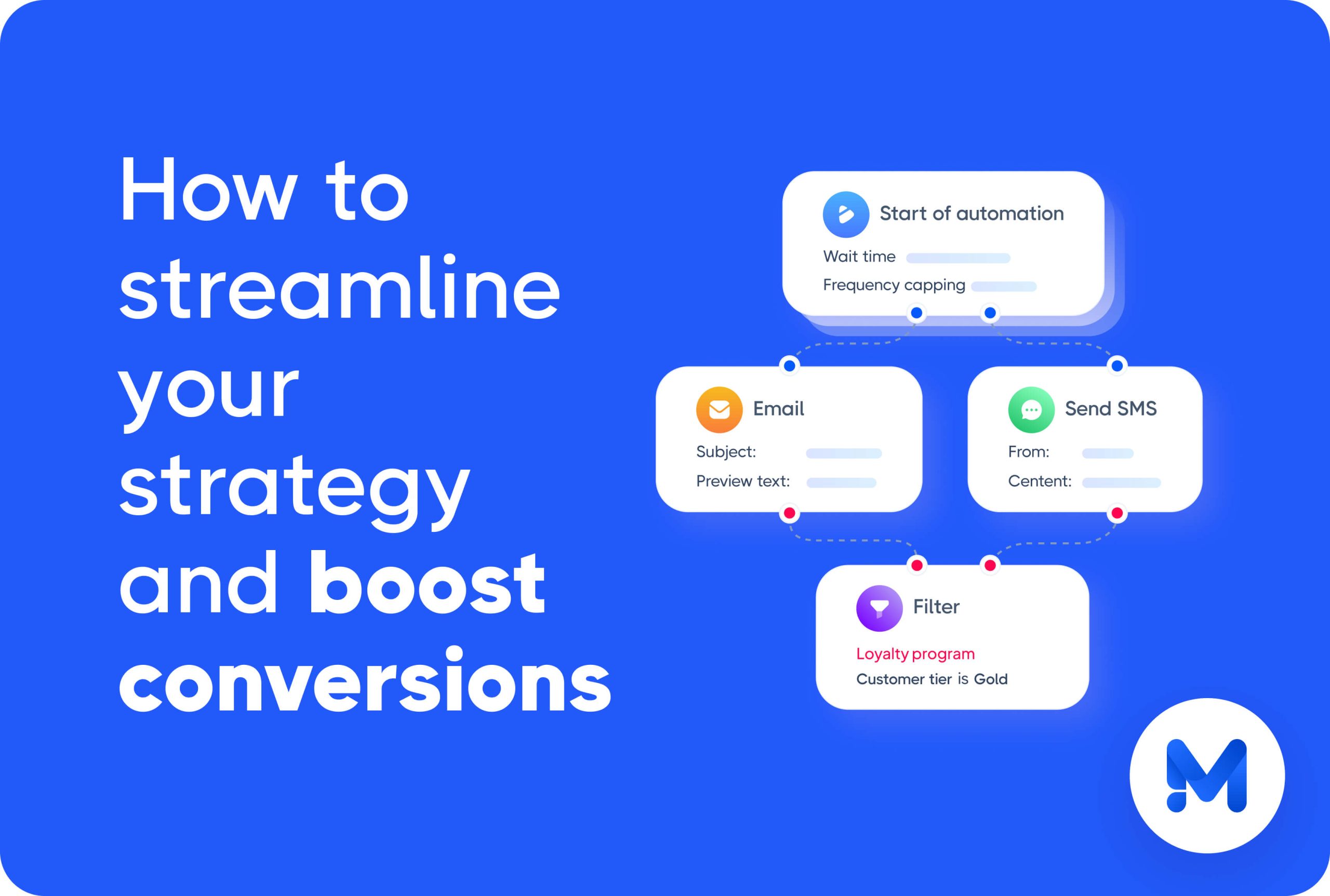
theMarketer makes it easy to build, launch, and manage email workflow automation without writing a single line of code. Whether you’re welcoming new subscribers, nurturing leads, or re-engaging inactive users, our visual workflow builder gives you full control with an intuitive drag-and-drop interface.
You can segment contacts, trigger actions based on user behavior, and personalize emails dynamically—all within a centralized dashboard.
Intuitive marketing reporting automation tools
We know reporting is one of the most time-consuming parts of client work. With theMarketer’s marketing reporting automation features, you can generate real-time performance reports that combine data from multiple channels—email, landing pages, campaigns—into one clear view.
Easily share dashboards with clients or stakeholders and monitor KPIs without having to dig through spreadsheets. You’ll spend less time building reports and more time optimizing what matters.
Pre-built templates and playbooks for fast implementation
Not sure where to start? theMarketer includes a library of ready-to-use automation templates and strategic playbooks tailored for different industries, campaign types, and goals. From abandoned cart flows to reactivation campaigns, you’ll find expert-designed options you can customize in minutes.
This gives you a head start—especially if you’re managing multiple projects or looking to scale your services efficiently.
Whether you’re just beginning your automation journey or looking to refine an existing setup, theMarketer provides the tools and support you need to succeed.
Marketing automation helps you save time, improve targeting, and scale your campaigns with ease. Whether you’re working solo or as part of a team, a well-built strategy backed by the right tools—like theMarketer—can make a measurable difference. Start small, stay focused, and let automation do the heavy lifting.
Photo source: Freepik.com